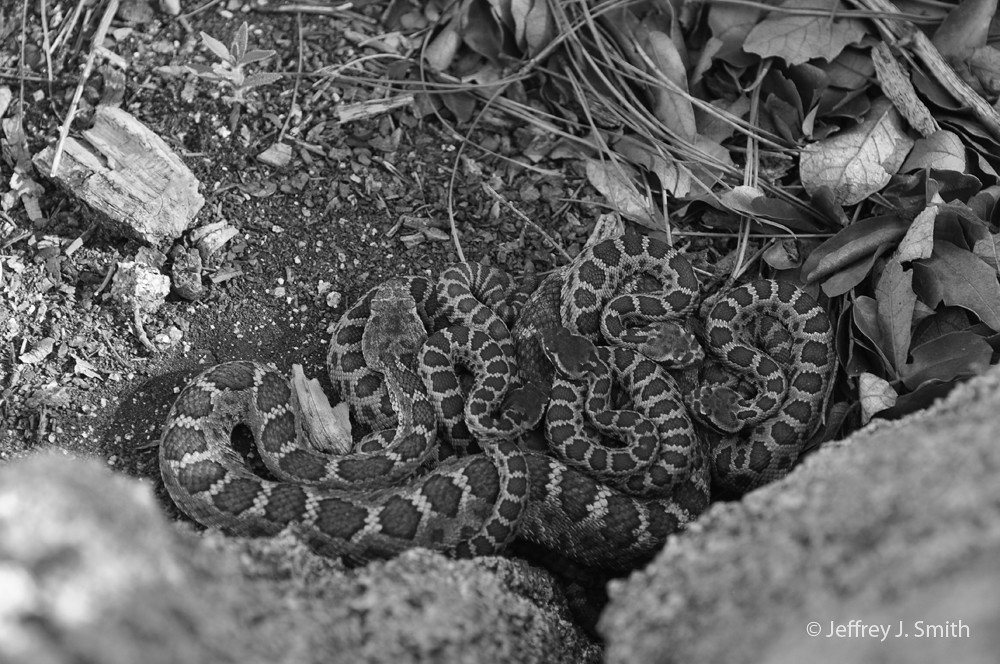
Rattlesnake babies are born alive and stay with mom a week or two until they shed their skin. During this vulnerable time, mom keeps them safe. But at communal nests, pregnant rattlesnakes and visiting males may care for the babies too.

Did you know that rattlesnakes give birth to live young and take care of their babies? They sure do! Read on for an introduction to the rattlesnake reproductive cycle and family life in the southwest US.
Gravid — carrying developing eggs.
Nest — (verb) give birth and care for babies until they shed their skin for the first time at 1-2 weeks old; (noun) site where nesting happens.
Pregnant — carrying developing embryos that will be born live.
Seasonal Patterns in Rattlesnake Behavior in the Southwest
Many may assume a tidy annual schedule of emerging from the den, mating, and laying eggs that will hatch in a few weeks — all of which happens each spring. So the real story of rattlesnake reproduction comes as a surprise!
Click here to view and download Seasonal Patterns in Rattlesnake Behavior in the Southwest as a pdf

Monsoon: Courtship, Combat, Mating
July — September
In the arid southwest US, nearly all our rain falls in the summer, also called the monsoon, and winter. The monsoon’s warm, humid conditions and increased productivity make it prime rattlesnake time, when most of their feeding and reproductive activity occurs.
Courtship and mating occur during the monsoon of the year before a female rattlesnake gives birth,* or earlier — rattlesnakes can store sperm for years!


Denning
late October — March
Most southwestern rattlesnakes are in or near their winter dens from October through March and even into May. They may emerge from their dens to get a quick drink from winter precipitation, even snow!

Emergence
late March — early May
Some rattlesnakes emerge from their dens and immediately head to hunting or nesting areas. But at some communal dens, they may stick around for weeks, several to dozens basking together. Pregnant females are usually the last to leave, when they’re ready to move to their nesting area and start gestating.

Gestation
May — July
In the late spring and dry summer, moms-to-be are focused on thermoregulation to promote the health of their developing embryos. Most do not eat during this period because nesting areas are not often near hunting areas.*

Monsoon: Nesting
July — September
The Nesting season is the first couple weeks of newborn rattlesnakes’ lives, when they stay close to mama. This also happens during the monsoon: early (or even a bit before the rain comes) for some species (e.g., Tiger and Rock Rattlesnakes) and late for others (e.g., Black-tailed and Western Diamond-backed Rattlesnakes).
More on this behavior below!

Female rattlesnakes invest A TON of time and energy into each litter. So much, in fact, that they are virtually unable to give birth in consecutive years and skip a year or two to recover.
There’s little time for hunting or feeding earlier in the year, so rattlesnake mamas may not eat for nearly a year before giving birth!*
*As usual in nature, there are interesting exceptions to the general schedule outlined above. For example, Western Diamond-backed Rattlesnakes may court and mate in the spring too, just after emerging from their winter dens. They may continue hunting and feeding throughout their pregnancy and there are records of Western Diamond-backeds giving birth in consecutive years in the Sonoran Desert, when resources are abundant (i.e., lots of rain).
Nesting
Rattlesnakes typically care for their newborns until they shed their skin (ecdysis) for the first time, when they’re one to two weeks old. With each day, newborns become more independent, exploring the area around the nest and straying a bit farther from their mother. Once they’ve shed their skin, the newborns leave the nest and start hunting on their own.
What sort of care do rattlesnake mamas actually provide?
Protection is the most obvious. They actively defend their young from threats by charging or assuming a defensive posture. If the babies wander too far, mothers might shield them with their bodies or herd them back to the shelter.
Staying together also offers thermal and hydration benefits. Babies bask on or near their moms on the surface and may continue getting heat from her overnight in the shelter. Newborns also huddle together in groups to conserve heat and water loss by reducing their exposed skin surface area. This is likely especially important leading up to their first ecdysis. (Click here to learn more about Baby Wads.)
What rattlesnake mamas don’t provide is food.
Rattlesnakes have not been observed feeding their babies. They swallow their prey whole, which would make feeding a litter of babies difficult. It is normal for rattlesnakes to go weeks or months without eating, so it’s not a big deal for the family to go without food for a couple weeks.
Babysitting!
So now you know how rattlesnakes take care of their kids. But wait; there’s more! Sometimes they take care of their friends’ kids too!?!
Learn more about this super-cool behavior in Rattlesnake Babysitting.
Rattlesnake Family Stories
Want more details about rattlesnake family life, videos and stories? Check these out:


This article first appeared in The Buzz! Find out more about The Buzz and how to subscribe.