Herp King of Southern Arizona
– Jeff Smith & Melissa Amarello, Co-founders, ASP
“Under NO circumstances are you to touch the snakes at this site. Ever.”
Roger Repp’s proviso reverberated in our heads above the happy hour din at Bob Dobbs. We were grab-‘n-tag field biologists, schooled in the old ways of herpetology, and put here to render data unto Ecology… right? To us, just observing meant the snakes might get away, depriving us of the currency of our profession — those indisputable readings from ruler, scale, and thermometer.

We had come expecting the usual swapping of field findings over beer, but we’d been unwittingly cast into Roger’s orchestration. Behind the scenes, he had convinced our mutual friend Young to share a magnificent Western Diamond-backed den with us. This site — an iconic maw at the base of a granite wall — was the hub of a secret society of rattlesnakes, one that careless or “handsy” interlopers would surely disrupt.
At the time, the idea of research without capture seemed crazy, even impossible. How would we tell individuals apart without tags or paint? Could we answer scientific questions through observation alone?
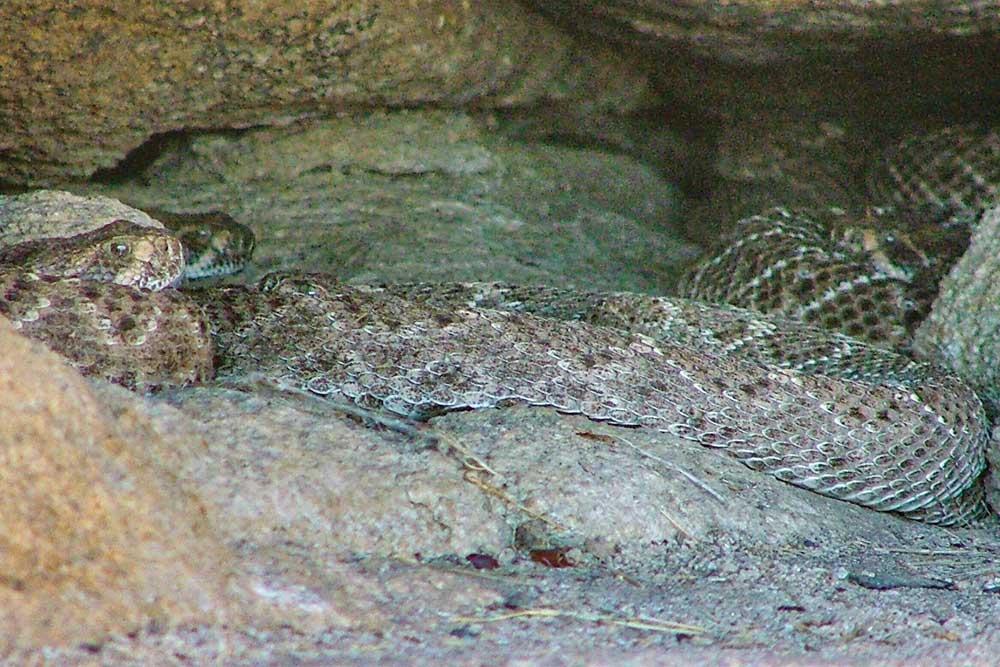
Young was the original guardian of the den and, rightly, wary of sharing this jewel with a couple of upstart researchers. But Roger saw potential in us. He and Young had learned to witness behaviors that scientists often missed by the very imperative to capture, and they proposed a challenge: if we could suppress our urge for quantification and learn to simply watch, they would show us a world we’d been missing. We didn’t hesitate to take the deal — we’d have done anything to see piles of snakes! Little did we know, this new door would eventually lead us in directions we couldn’t have imagined.
And what a world it was. Unlike most dens in the Sonoran Desert, this was not a mere crack in the rock, but a cave with an opening large enough for an adult to crawl inside. You could set up lawn chairs yards away and watch a reptilian soap opera unfold. Twenty years and dozens of dens later, we have still never seen anything like it.
But before we could truly begin our study, tragedy struck: yahoos found the den and slaughtered virtually all of the snakes. That heartbreaking loss illustrated the desperate need for a new way of being around snakes. It planted the seeds for what would eventually become Advocates for Snake Preservation.
We were fortunate to have taken many trips into the field with Roger, looking for reptiles in new places or visiting reliable cracks and enjoying every minute, whether we saw anything or not! By standing back and leaving the hooks in the truck, we learned how to witness their world without disrupting it. When we began our study of Arizona Black Rattlesnakes, we were ready to put this new method to the test. We applied that quiet discipline to produce the first description of a snake social network, showing that snakes have friends and social preferences.
Many winter and spring days were spent with Roger looking for new dens or visiting old reliable ones.
The Sonoran Desert has mild winters, so it is often possible to see reptiles snoozing inside their den. Our friend Roger had an eye for finding these windows into reptiles’ winter world. In January 2020, he led us to a crevice where a male Tiger Rattlesnake was spending the winter. Another fun find with Roger was a den shared by Western Diamond-backed Rattlesnakes and Gila Monsters, who we were lucky enough to see basking together in the spring sun.
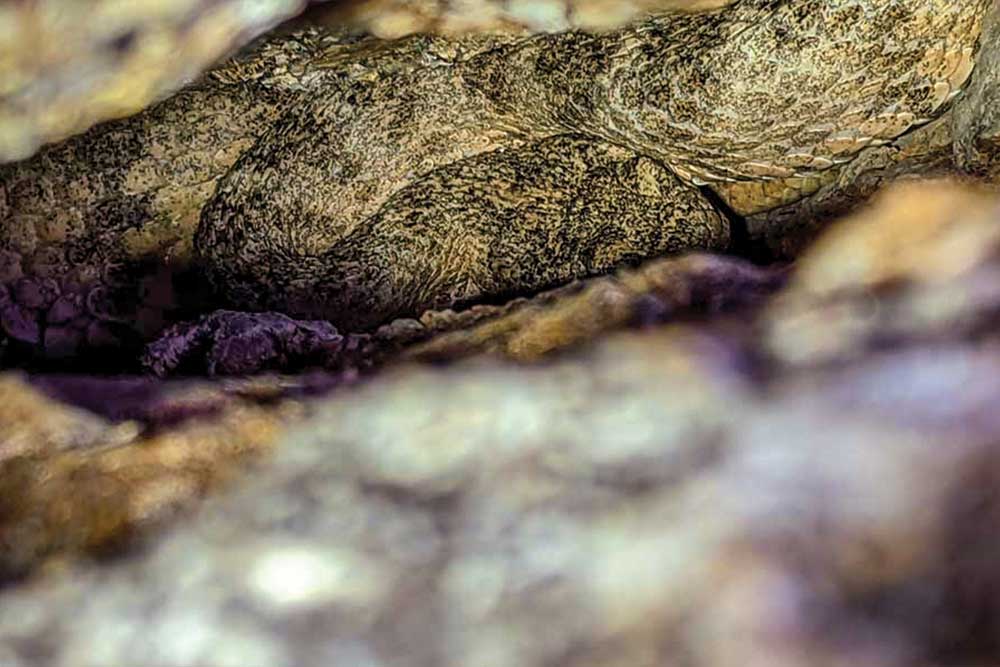
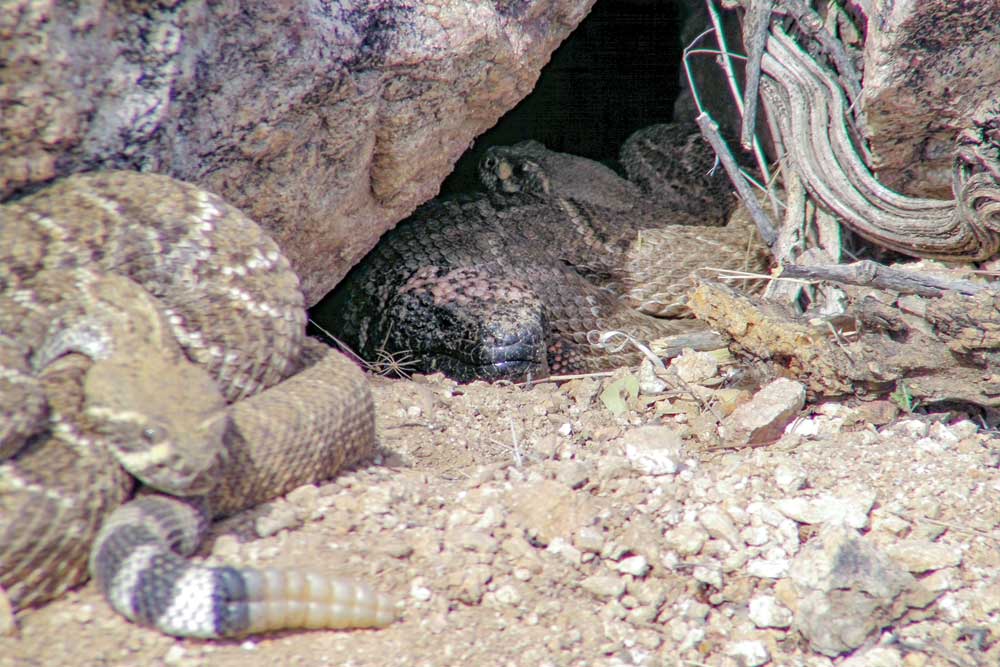
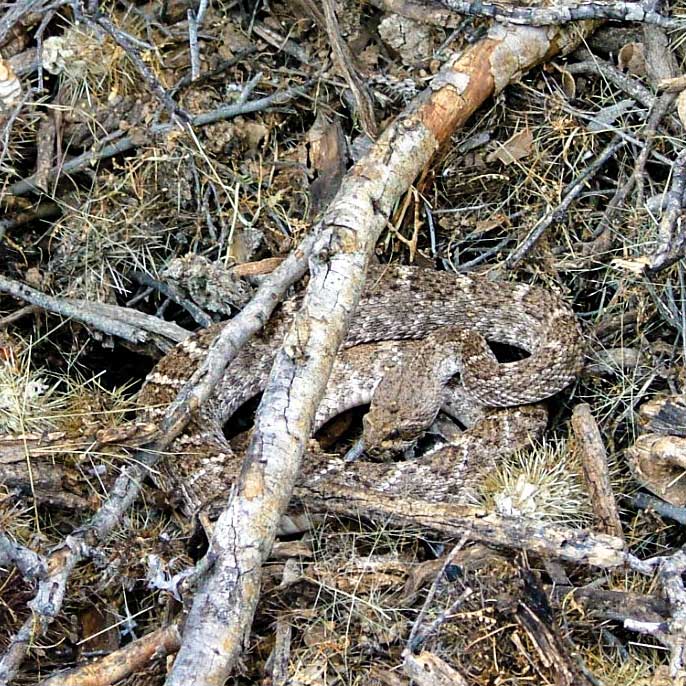
For many years, Roger’s uproarious email missives were inbox gold for the Tucson Herpetological Society and a dedicated personal following. In a singular style that blended field reports with miscellaneous rantings, he delighted readers with observations of previously undocumented behaviors and the antics of the pursuit. He chronicled the triumphs and follies of the absurd tribe of humans obsessed with reptiles while ennobling their targets by faithfully rendering the secret lives and struggles of the animals themselves. His stories — earned over thousands of hours of wandering in the desert — put you right there with him: navigating a flash flood in his little pickup, watching snakes drink snow, or following Doublenicks across the road for the third and final time.
Roger’s engaging brand of storytelling inspired our Social Snakes blog and became the heartbeat of our education programs. He taught us that the most profound insights don’t come from the readings off a ruler or scale, but from the realization that the disciplined human observer is the only instrument capable of seeing the whole story. By widening our focus, he opened a window into the complex social lives of rattlesnakes that we might have otherwise never seen. He didn’t just show us where the snakes were; he showed us how to see them.
Stacking
Doublenicks, male Western Diamond-backed Rattlesnake, is perched on top of a female in a behavior known as stacking. Stacking is a form of mate-guarding in rattlesnakes, thought to help conceal the female from other potential suitors.
I encountered and photographed this pair in one of my first field trips with Roger Repp in March, 2004.
– Melissa

This article first appeared in The Buzz! Find out more about The Buzz and how to subscribe.